Tuesday, September 30, 2014

Sexy Knees Sell, Unsexy Knees Don't

        In this Kenneth Cole advertisement promoting Black a new fragrance for men it states that "It's better in the dark" the connotation of this statement is that sex is better in the dark. Kilbourne would not only have a problem with the suggestive and sexual statement of "It's better in the dark" but also with the fact that the woman pictured is being objectified. The woman's face isn't shown which shows that she is merely an object to have sex with "in the dark" and not a human being. Kilbourne would also object to the fact that the woman is blind folded which usually is done before violence occurs so people can't see their attacker but in this ad the act of blind folding is sexualized and partly numbs us to this act that tends to lead to violence afterwards.

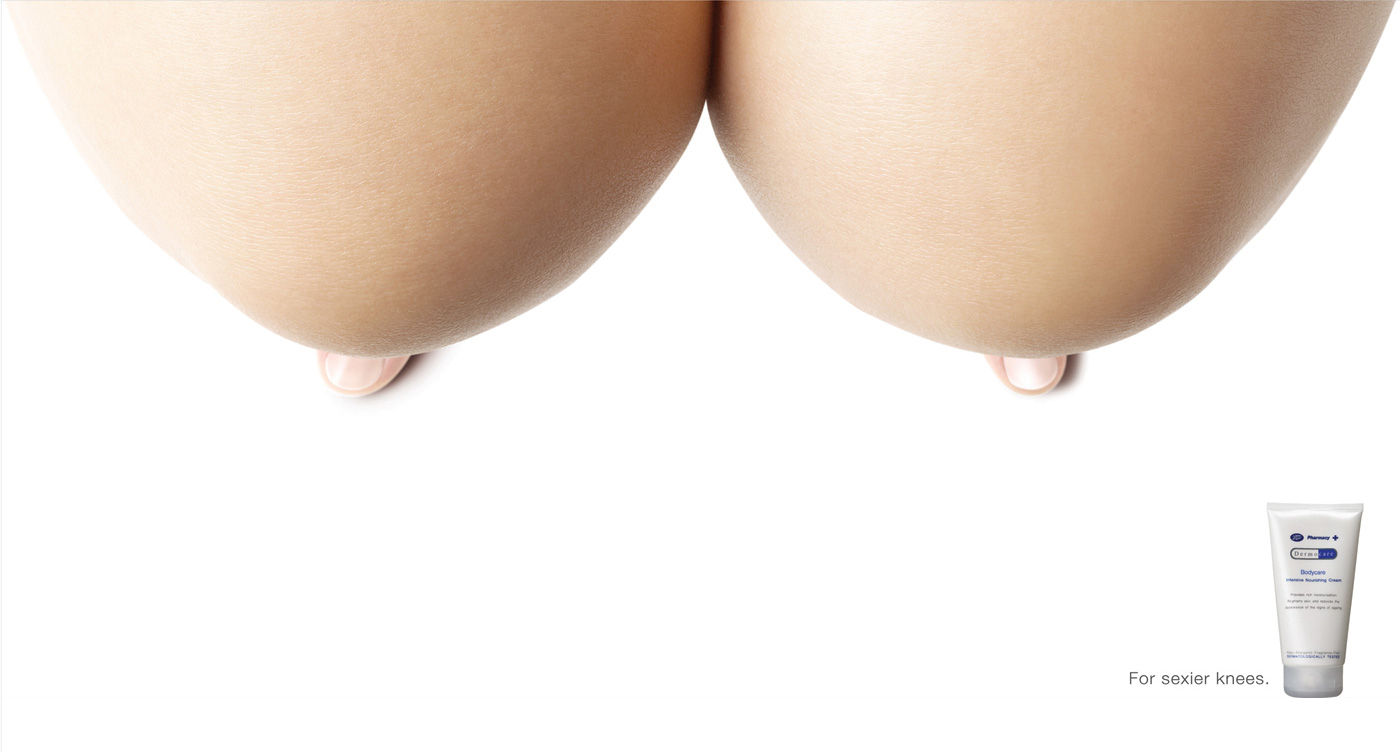
            In this Dermocare Intensive Nourishing Cream it is pretty blatantly obvious that the ad is trying (and I would say succeeding at especially since my boyfriend just looked at the screen while I was writing this and asked me "Are those boobies?" ) to make a pair of knees look like a pair of breasts, Kilbourne would obviously object to this idea of turning women into objects and using their boobs or what appears to be breasts in order to sell things such as body cream. This ad even states "For sexier knees" but the reality is NOTHING is sexy about knees! They are merely a part of our body that we need in order to move and function, they are not sexual objects nor are they in any way attractive.

Tuesday, September 23, 2014

Silly Rabbit the Internet is for Kids

          In "The Lady or The Tiger" it is clear that advertising teaches us at a very young age the importance of being "cool" and how to obtain this coolness. It is also explained how our coolness changes as we get older. In elementary school and possibly even younger we were taught what was cool through cereal commercials, the Trix rabbit could never have the cereal but young children could and that's what makes them cool. When you get into High School you focus less on being cool and a lot more on just not being lame, advertisers use this so they can portray objects so that it seems everyone else has them so you should too. When you reach adulthood semi-originality, but not to the point of weirdness, is what makes you "cool."
           So how does advertising and coolness relate to the vices and virtues of the internet? Through social media of course, with the beginning of this age of the internet critics believed that individuals would become isolated and soon lack important social skills needed in work places and other social situations. This criticism was quickly proven wrong with the start of social media websites that actually connect a lot more people and not only connect more people but people with similar interests and views. Recently however, social medias have had a focus on who on the internet is cool and who is not. As young people we strive to be cool and one reassurance that we are cool is by getting a bunch of likes and favorites on your social media sites. This shows not only you but also the world that you are likable, relatable, and even cool. We all strive to be cool and the internet works as a tool to help us become cool.

Tuesday, September 16, 2014

Popularity Never Felt So Good

         In the documentary "Generation Like" we are shown the world of social media that many, if not all of us as young adults, know so well. It seems like everyone is on Facebook, Twitter, and Instagram now-a-days and we all crave the likes, retweets, and favorites that show acceptance and approval from our followers. With popularity online comes an opportunity as well. "Generation Like" shows us that Companies draw into these social medias and our need to be connected and will pay people such as vloggers to endorse their products on their videos. With this the marketers then become the consumers.
          Another big point made in this documentary is that Companies are constantly monitoring and recording every single action that we make on the internet. They use this data in order for them to twist and manipulated their products into our social medias and hopefully into our interests. An example would be the new Hunger Games movie, the marketing team for the movie is actually controlling and manipulating every bit of information that comes out in order to build up a big excitement for the movie. This way they don't release all of the information at once and maintain our interest in the new movie without us forgetting about it. Although the marketing team would never admit to this.

Monday, September 8, 2014

Spaghetti Sauce, Mustard, and Happiness

According to Dan Gilbert "Natural Happiness is when we get what we want and synthetic happiness is what we get when we don't get what we want." Before Howard Moskowitz, it was believed that people wanted the most cultured foods and chefs assumed they knew the perfect way to make a dish. There was no variability in our food, no decisions to be made. Because of all this the relationship between food and our happiness was purely synthetic. We weren't able to choose what variety of spaghetti sauce or mustard we thought we would enjoy more. We were simply stuck with the one kind that food producers thought we wanted and because of this we weren't happy we got what we wanted, we were just happy with what we had.


Howard Moskowitz constructed experiments to find out what kind of spaghetti sauce people wanted. When he asked them they never once said chunky but after many taste tests it turns out one third of Americans actually preferred chunky tomato sauce and thus began variability in our food. Moskowitz stated that there aren't hierarchies of food, or mustard in this case, "there is a horizontal plane of different mustards suited for different people" and "In embracing the diversity of human beings we will find a sure way to true happiness." Now that we are able to choose the variety of spaghetti sauce or mustard that we want, the relationship between food and our happiness is that of natural happiness. We can choose what we want and therefore be happy because we got what we wanted.